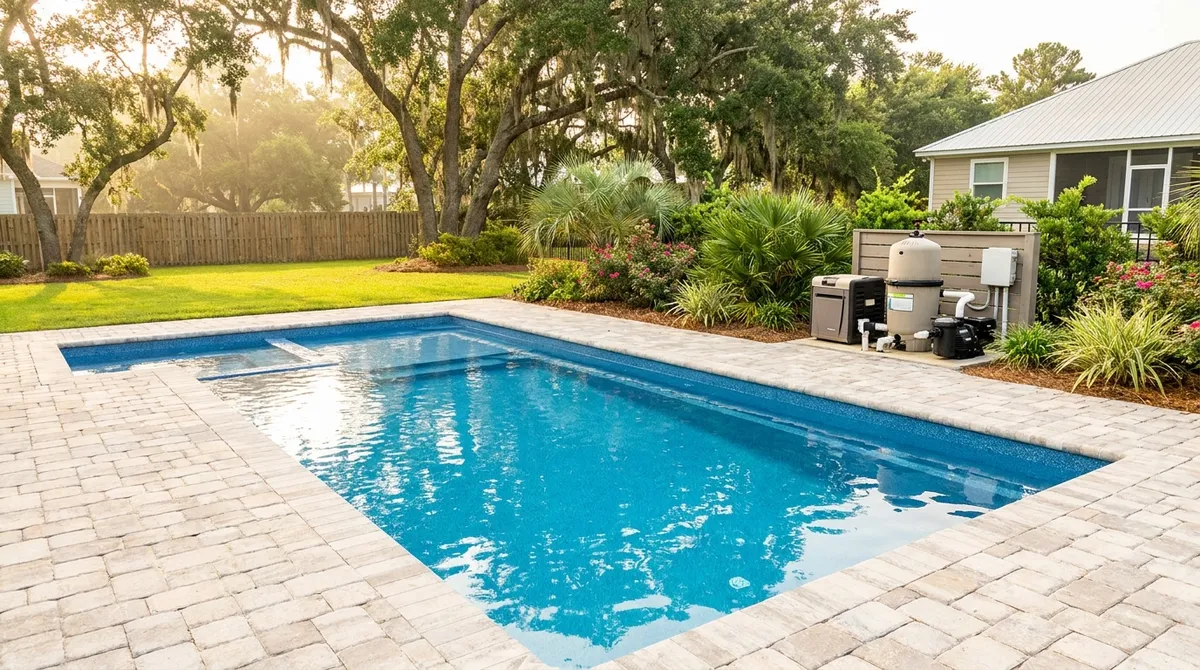
Pool Maintenance Cost in Mississippi: Yearly Budget
Key Takeaways
- Pool maintenance in Mississippi typically runs $1,200 to $2,500 a year for an owner-maintained fiberglass pool, and $3,000 to $5,000 a year once weekly professional service is added
- Electricity is usually the single largest line item on the Gulf Coast, driven by how many hours the pump runs during our long, hot swim season
- Fiberglass pools generally cost less to maintain than concrete over a decade because a non-porous surface holds chemistry more easily and never needs resurfacing
- The biggest savings for most Gulf Coast owners come from a variable-speed pump and consistent weekly water testing, not from buying cheaper chemicals
What Pool Maintenance Costs in Mississippi Each Year
Pool maintenance in Mississippi typically costs $1,200 to $2,500 a year for a homeowner who handles the work themselves, and $3,000 to $5,000 a year with a weekly service. The spread comes down to four things: pool size, pump efficiency, sanitation system, and whether you do the routine care or pay someone else to.
Here is roughly how a typical annual budget divides up for a mid-size fiberglass pool in Hancock or Harrison County:
- Electricity: $400–$1,100. Almost entirely pump runtime, plus a heater if you have one. This is where efficient equipment pays for itself.
- Chemicals: $300–$700. Chlorine or salt, plus balancers. Chlorine-tablet pools sit at the higher end; saltwater systems trade chemical cost for a cell that is replaced every few years.
- Water: $50–$150. Evaporation and backwash top-offs. Gulf Coast summers evaporate more than most owners expect, though our rainfall offsets part of it.
- Filter media and small parts: $100–$300. Cartridges, DE, gaskets, and the occasional skimmer basket.
- Seasonal service and repairs: $150–$500. Equipment checks, minor fixes, and the odd part failure.
- Insurance premium impact: varies. A pool commonly increases a homeowners policy, especially liability limits, as we cover in our guide to pool insurance for Mississippi homeowners.
Those ranges assume a well-designed pool with equipment sized correctly for the shell. An oversized pump on an undersized filter can push the electricity line alone past $1,200 a year without improving water quality at all.
Why Gulf Coast Weather Drives Pool Maintenance Costs
The Mississippi Gulf Coast is one of the more demanding climates in the country for a swimming pool, and it shows up in the annual budget. Long heat, high humidity, heavy rainfall, and a swim season that stretches from March into October all increase chemical demand and pump hours compared with cooler regions.
Three coastal factors matter most:
Heat and a long season. Warm water consumes sanitizer faster and encourages algae. A pool in Gulfport or Biloxi may run its pump eight to nine months a year, where a Midwest pool runs four. Same equipment, double the operating hours.
Rain and dilution. Gulf Coast rainfall regularly dilutes chemistry and shifts pH after a heavy afternoon storm. That means more frequent testing and small corrections rather than one big monthly adjustment. Our complete guide to swimming pool water chemistry explains what to watch and how often.
Debris and storms. Live oaks, pines, and pollen season load skimmers and filters far more heavily here than in an open suburban yard. Hurricane season adds occasional cleanup and the cost of preparing the pool ahead of a storm.
None of this makes a Gulf Coast pool expensive to own. It does mean that a maintenance budget copied from a national average article will read low for Bay St. Louis, Long Beach, or Pass Christian.
Fiberglass vs. Concrete Maintenance Costs Over Ten Years
Over a ten-year window, fiberglass pools generally cost meaningfully less to maintain than concrete pools. Industry sources consistently attribute the gap to three things: a non-porous gelcoat surface that gives algae little to hold, lower chemical demand as a result, and no resurfacing cycle.
Concrete and plaster pools are periodically resurfaced over their service life, and that single expense often exceeds a decade of routine fiberglass upkeep. Porous surfaces also demand more sanitizer and more brushing in warm, humid conditions—exactly the conditions we have from May through September. Vinyl-liner pools avoid resurfacing but carry liner replacement on a similar cycle.
This is why a concrete bid that comes in near a fiberglass bid is not actually close on total cost. Our cost analysis of fiberglass pools versus other pool types compares the options over the long run, and the pools and spas we offer shows the shell sizes those numbers are based on.
Where Gulf Coast Pool Owners Overspend
Most Mississippi pool owners overspend in the same four places, and all four are fixable. The largest by far is pump electricity, followed by reactive chemical buying, neglected filtration, and paying for service tiers that do not match how the pool is actually used.
Running an inefficient pump. A single-speed pump running long summer hours can add $60 to $120 a month to a Gulf Coast power bill. A variable-speed pump moving the same water at lower speed typically cuts that dramatically, which is why it is the first upgrade we point owners toward in our guide to energy efficient pool equipment.
Chasing chemistry instead of maintaining it. Testing weekly and correcting slightly costs less than correcting a green pool once a summer. Shock, algaecide, and clarifier bought in a panic are the most expensive chemicals you will ever buy.
Ignoring the filter. A dirty filter makes the pump work harder for less circulation, raising power use and sanitizer demand at the same time. Cleaning on schedule is the cheapest efficiency measure available.
Buying more service than you need. Full weekly service is genuinely worth it for some households and unnecessary for others. Many owners do well with a mid-season equipment check and handle the weekly routine themselves.
Want an honest read on what your specific pool should cost to run each year? Contact Bay Pool Company or call 228.819.7219—we are glad to talk through equipment and operating costs even if you are still shopping.
What Weekly Pool Service Costs in South Mississippi
Weekly pool service on the Mississippi Gulf Coast is commonly quoted at $120 to $250 a month, usually covering water testing and chemical additions, skimming, brushing, emptying baskets, and a visual equipment check. Chemicals are sometimes included and sometimes billed separately, so confirm which before comparing two quotes.
Service is worth the money when the pool is on a rental or second property, when travel keeps you away for weeks at a stretch, when the yard drops heavy debris, or simply when you would rather swim than test. It is easier to skip when you are home most weeks and comfortable with a twenty-minute routine.
A useful middle path many Gulf Coast owners take: handle weekly care yourself, and book a professional opening in early spring plus one equipment check before hurricane season. That keeps annual cost near the low end of the range while still putting eyes on the equipment twice a year.
Budgeting for Equipment Replacement
Beyond routine upkeep, plan for equipment replacement on a rolling basis rather than as a surprise. Manufacturers and industry sources generally cite service lives of roughly 8 to 12 years for pumps and heaters, 3 to 7 years for saltwater chlorinator cells, and 2 to 3 years for filter cartridges—though actual figures vary by brand, model, and use.
Setting aside $300 to $500 a year covers most of it. Salt cells are the item that surprises people most, since a replacement commonly runs several hundred dollars and arrives quietly at the end of its cycle. Warranty terms come from the equipment manufacturer and vary by product, so keep the paperwork and register new equipment when it is installed.
Coastal air deserves one note of its own. Salt air along the beachfront in Pass Christian, Long Beach, and Waveland is harder on outdoor equipment than inland air, so shaded, well-ventilated equipment placement and regular rinsing help components reach the upper end of their expected life rather than the lower.
Bay Pool Company is based in Waveland and works with pool owners across Bay St. Louis, Diamondhead, Gulfport, Biloxi, and Pass Christian. If you are weighing a new pool and want realistic operating numbers alongside the purchase price, request a free quote or call 228.819.7219.
Frequently Asked Questions
How much does pool maintenance cost per year in Mississippi?
Pool maintenance in Mississippi typically costs $1,200 to $2,500 a year for an owner-maintained fiberglass pool, or $3,000 to $5,000 a year with weekly professional service. Electricity for the pump is usually the largest single line item on the Gulf Coast because of the long swim season, followed by chemicals at roughly $300 to $700 a year. Pool size, pump efficiency, and sanitation system determine where a specific pool falls.
Are fiberglass pools cheaper to maintain than concrete pools?
Generally yes. Industry sources attribute the difference to the non-porous gelcoat surface, which resists algae and holds water chemistry more easily than porous concrete, and to the absence of a resurfacing cycle. Concrete and plaster pools are periodically resurfaced over their service life, and that expense often exceeds a decade of routine fiberglass upkeep in a warm, humid climate like the Mississippi Gulf Coast.
How much does weekly pool service cost on the Gulf Coast?
Weekly pool service in South Mississippi is commonly quoted at $120 to $250 a month. That typically includes water testing and chemical additions, skimming, brushing, emptying baskets, and a visual equipment check. Chemicals are included in some plans and billed separately in others, so confirm which applies before comparing quotes from two companies.
What is the biggest hidden cost of owning a pool in Mississippi?
Electricity is the cost owners most often underestimate. A single-speed pump running the long Gulf Coast season can add $60 to $120 a month to a power bill, while a variable-speed pump moving the same water at lower speed uses substantially less. Equipment replacement is the second surprise: pumps and heaters generally last 8 to 12 years and saltwater cells 3 to 7 years, so budgeting a few hundred dollars a year avoids an unplanned expense.
Does the Gulf Coast climate increase pool maintenance costs?
Yes. Heat and humidity increase sanitizer demand, frequent rainfall dilutes chemistry and shifts pH, and heavy tree and pollen debris loads skimmers and filters. A pool in Gulfport or Biloxi also runs its pump eight to nine months a year rather than four. National average maintenance figures generally read low for Bay St. Louis, Long Beach, and Pass Christian for these reasons.
This article is general educational information about pool ownership. It does not describe the methods, specifications, or warranties of Bay Pool Company. Construction and installation practices vary by site and follow the pool manufacturer's specifications.