
The Top Types of Swimming Pool Automatic Cleaners and How They Work: A Simple Guide
Key Takeaways
Automatic pool cleaners come in three types: robotic, suction-side, and pressure-side, each suited for different needs and pool conditions.
Robotic pool cleaners offer advanced technology, superior energy efficiency, and minimal maintenance, while suction-side and pressure-side cleaners cater to specific debris types and pool setups.
Choosing the right cleaner involves considering pool type, debris load, and maintenance needs, with robotic cleaners being the top choice for efficiency and performance.
Understanding Automatic Pool Cleaners
 Automatic pool cleaners are a diverse group of devices designed to keep your pool clean with minimal manual effort. These cleaners come in three main varieties: robotic, suction-side, and pressure-side. Each type has unique features and benefits, catering to different pool conditions and owner preferences.
The primary advantage of using automatic pool cleaners is the significant reduction in maintenance time. Pool owners can save up to 70% of the time typically spent on manual cleaning tasks. These cleaners operate independently, reducing the need for constant supervision, though occasional monitoring is necessary to ensure they don't get stuck. Automatic cleaners manage everything from surface debris to dirt and algae, keeping your pool sparkling clean and extending the life of your filtration system.
Another significant benefit is the efficiency with which these cleaners operate. They connect to the pool's skimmer or built-in vacuum line, allowing them to function seamlessly as part of the pool's existing system. This integration helps in preventing the clogging of the filtration system by dealing with heavy surface debris efficiently.
Whether you choose a robotic cleaner with advanced navigation or a suction-side cleaner that utilizes the pool's pump, the right automatic cleaner can make maintaining a clean pool more cost-effective and less labor-intensive.
Robotic Pool Cleaners
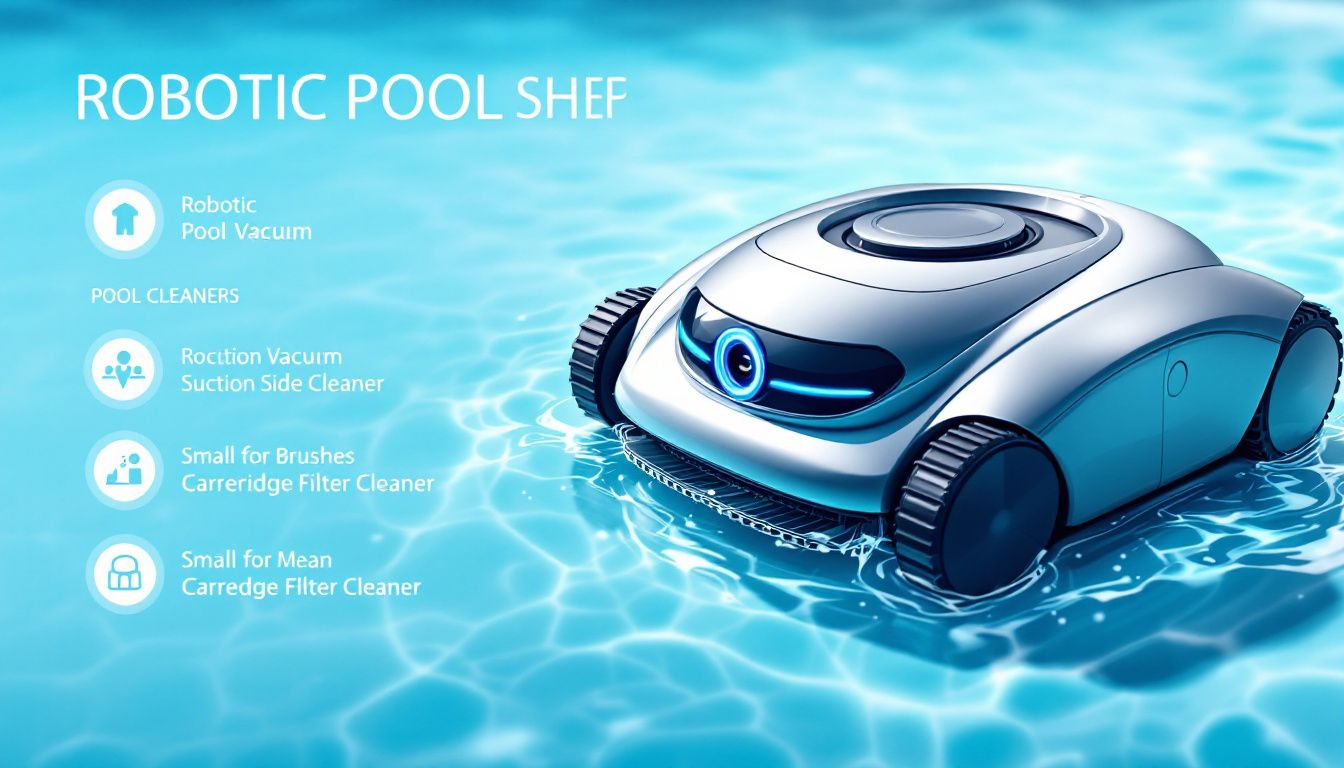 Robotic pool cleaners are the epitome of modern pool cleaning technology. These self-directed devices operate independently of the pool's filtration system, utilizing advanced sensors and electronic components to navigate and clean the entire pool. They are designed to handle all surfaces, from the pool floor to the walls and even the tile line, ensuring a comprehensive clean.
One of the standout features of robotic pool cleaners is their energy efficiency. These devices are equipped with low voltage DC motors, making them significantly more energy-efficient compared to other types of cleaners. With the ability to filter out particles as small as 2 microns, robotic pool vacuums offer superior cleaning performance.
Typically, it takes about 2-3 hours for a robotic cleaner to complete a cleaning cycle, leaving your pool sparkling clean with minimal effort on your part.
Advanced Cleaning Technology
Robotic pool cleaners are packed with advanced cleaning technology designed to tackle even the toughest pool cleaning tasks. Equipped with brushes that scrub dirt from pool surfaces, these cleaners ensure that every inch of your pool is thoroughly cleaned. The rise of wireless smart robots has further enhanced the usability and convenience of these devices, making them an excellent choice for modern pool owners.
Additionally, robotic cleaners often feature multiple cleaning cycles and filters, including fine and ultra-fine options, to effectively capture all sizes of debris. This advanced technology not only provides a more thorough clean but also reduces the need for frequent maintenance, allowing you to enjoy a cleaner pool with less hassle.
Maintenance and Longevity
One of the significant advantages of robotic pool cleaners is their low maintenance requirements. Unlike other types of cleaners, they don't rely on the pool's filtration system, which reduces wear and tear on the system. Basic maintenance tasks include cleaning the filters or replacing parts as needed, which are simple and straightforward to perform.
The longevity of robotic pool cleaners is another key benefit. With an expected lifespan of 5 to 8 years or more, these devices are a worthwhile investment for any pool owner. Choosing a model with a self-contained filter can further reduce maintenance costs and extend the cleaner's operational life.
Moreover, their superior cleaning efficiency and lower energy usage over time help offset the initial maintenance costs, making them a cost-effective solution in the long run.
Suction-Side Pool Cleaners
 Suction-side pool cleaners are a popular choice for many pool owners due to their simplicity and effectiveness. These cleaners connect to the pool's skimmer and pool skimmers. They utilize the suction from the filtration system to remove dirt and debris from the pool floor. They travel along the bottom of the pool, ensuring that all areas are covered.
One of the key benefits of suction-side cleaners is that they do not require additional installation components beyond the existing pool system. They connect directly to the skimmer box, making them easy to set up and use.
However, an efficient pool filtration system is crucial for these cleaners to function effectively, as they rely on the pool's circulation pump to create the necessary suction.
Installation and Operation
Suction-side pool cleaners are straightforward and hassle-free to install. They use the pool's existing circulation pump for suction, eliminating the need for a booster pump and making them a cost-effective option.
The operation of suction-side cleaners is simple. Once connected to the pool's skimmer, they move across the pool floor, sucking up dirt and debris into the pool's filtration system. This integration with the pool's existing system ensures that the cleaner can function efficiently without the need for additional components.
Pros and Cons
While suction-side pool cleaners are effective at cleaning the pool floor, they do have some drawbacks. One notable disadvantage is that they can drift across surfaces without much user control, which may result in areas being missed during the cleaning process. Additionally, their popularity has declined in some markets, with many considering them an 'old school' option.
Despite these cons, a suction cleaner is still widely used for automatic pool cleaning due to its simplicity and effectiveness. They are especially suitable for pools with fine dirt and algae, making them a practical choice for many pool owners.
Understanding both the advantages and disadvantages can help you make an informed decision about whether this type of cleaner is right for your pool.
Pressure-Side Pool Cleaners
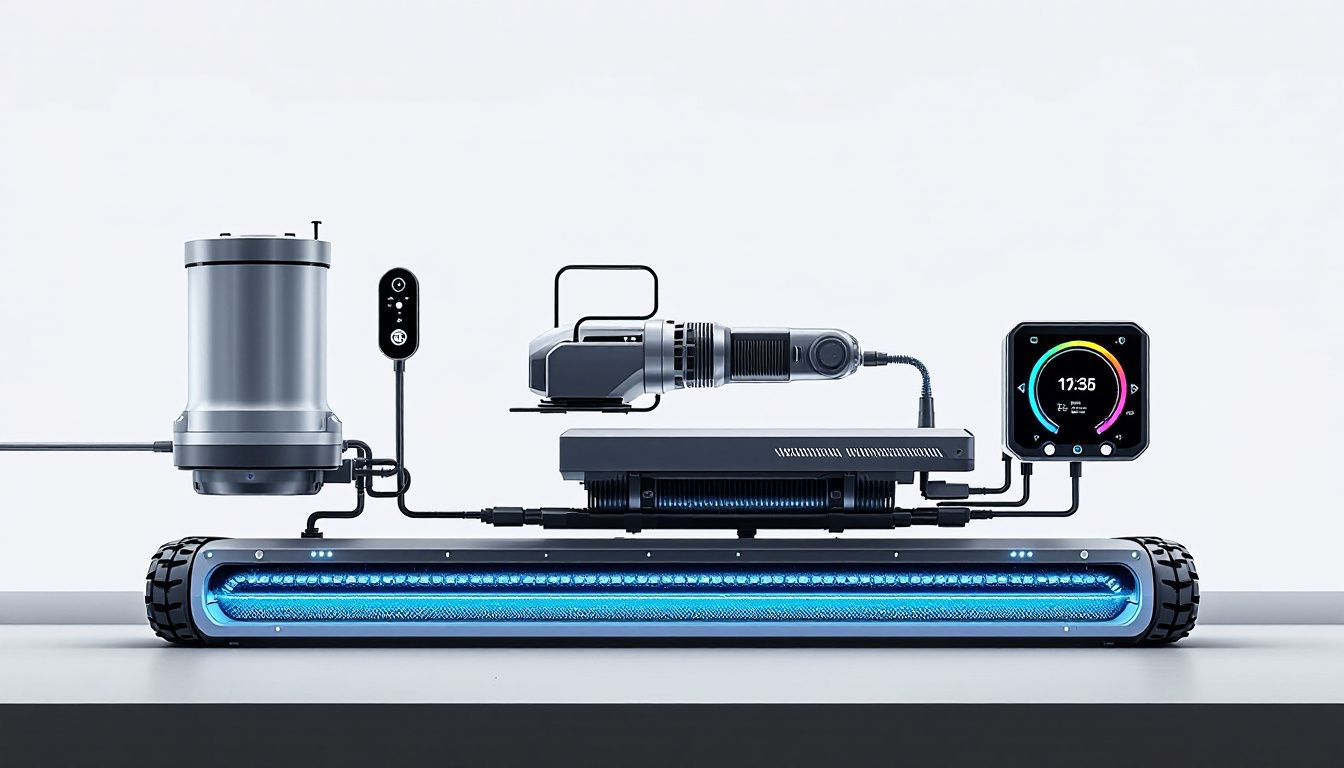 Pressure-side pool cleaners offer a robust solution for handling larger debris such as leaves, twigs, and pebbles. These cleaners utilize water pressure from the pool's return jets to move around and collect debris. They are effective at picking up large and small debris, making them suitable for various pool conditions.
These cleaners can operate using either a dedicated booster pump or the main circulation pump, depending on the model. The use of pool water pressure for propulsion ensures that pressure-side cleaners can cover all areas of the pool, including steps and corners, for a thorough clean.
Types of Pressure-Side Cleaners
There are two main types of pressure-side cleaners: those that require a booster pump and those that connect to the main circulation pump. Booster pump models often provide more powerful cleaning, thanks to the additional water pressure generated by the pump. These models are ideal for pools that require more intensive cleaning.
Pressure-side cleaners that connect to the main circulation pump are a more economical option, as they do not require additional equipment. However, their cleaning power may be slightly less compared to booster pump models. Choosing the right type of pressure cleaners depends on your pool's specific needs and existing system setup.
Effectiveness and Cost
Pressure-side pool cleaners are highly effective at removing larger debris from the pool, which makes them suitable for pools with a lot of leaves, twigs, and other sizable debris. Their ability to handle large debris ensures that the pool remains clean and free of obstructions.
However, the cost of these cleaners can vary. Models that require a booster pump may incur additional costs due to the need for extra equipment and installation.
Despite this, their effectiveness in maintaining a clean pool often justifies the investment, especially for pools that experience heavy debris load.
Comparing Automatic Pool Cleaners
 When comparing automatic pool cleaners, it's essential to consider the efficiency, cleaning coverage, and ease of use of each type. Robotic pool cleaners generally outperform pressure and suction-side cleaners in terms of power, efficiency, and cleaning coverage. Their advanced navigation systems allow them to map and clean pools methodically, unlike pressure and suction-side cleaners that wander randomly.
Pressure-side pool cleaners are better suited for handling larger debris and are more effective at cleaning stairs and corners compared to suction-side cleaners. However, they may require additional equipment, such as a booster pump, which can increase the overall cost. Suction-side cleaners are a cost-effective option for pools with fine dirt and algae, but their cleaning efficiency may be lower compared to other types.
Ultimately, the choice of cleaner depends on your pool's specific needs and your budget. Robotic cleaners offer superior performance and energy efficiency, making them a popular choice despite their higher initial cost. Pressure-side cleaners provide robust cleaning power for pools with heavy debris, while suction-side cleaners offer a simple and economical solution for pools with lighter debris loads.
Choosing the Right Automatic Pool Cleaner
Selecting the right automatic pool cleaner involves considering several factors, including the type of pool, cleaning specialization, and ease of use. The size and type of your pool play a crucial role in determining which cleaner will be most effective. For instance, robotic pool cleaners often come with customizable features like multiple filter options and app connectivity, providing greater control over the cleaning process.
Evaluating product reliability through customer feedback, product comparisons, and warranty information can guide your purchase. Investing in a high-quality cleaner can save time and money, as cheaper models often underperform and require frequent repairs.
Running your robotic cleaner daily or weekly can ensure optimal performance and keep your swimming pool clean in top condition.
In-Ground vs. Above-Ground Pools
The requirements for automatic pool cleaners differ between in-ground and above-ground pools. Suction-side cleaners are ideal for in-ground pools that deal with fine dirt and algae, providing effective cleaning for these common issues. Robotic pool cleaners or automatic in-ground pool vacuums are also preferred for in-ground pools due to their advanced cleaning capabilities and efficiency.
Above-ground pools require cleaners compatible with the pool's material type and pool floors conditions. Suction-side or pressure-side cleaners with larger wheels are recommended for rough floors. These types of cleaners are typically lighter and less expensive, making them suitable for an above ground pool.
Factors such as pool shape, slope, and pool surface area should also be considered when choosing the right cleaner.
Pricing and Cleaning Schedules
The cost of pool cleaners can vary widely based on the model type, retailer, and season. Robotic pool cleaners, despite their higher initial cost, often provide advanced features such as the ability to schedule cleanings via remote control or smartphone app, adding to their convenience and appeal.
Setting up a regular cleaning schedule is crucial for maintaining your pool's cleanliness and ensuring the longevity of your cleaner. Whether you opt for daily, weekly, or customized schedules, ensuring consistent operation can help keep your pool in optimal condition and reduce the need for frequent maintenance.
Energy Efficiency and Environmental Impact
Energy efficiency is a critical factor when selecting an automatic pool cleaner. Robotic cleaners are particularly noteworthy in this regard, as they use low voltage DC motors that consume significantly less power than the AC motors found in suction and pressure-side cleaners. In fact, robotic pool cleaners are up to 87% more energy-efficient, costing roughly 5 cents per hour to operate.
This high level of energy efficiency not only reduces operational costs but also contributes to environmental sustainability by lowering overall energy consumption and carbon footprint. Understanding the energy consumption of different cleaners is vital for making a choice that aligns with both your budget and sustainability goals.
Shorter cleaning cycles generally result in more efficient energy use, making robotic cleaners a top choice for eco-conscious pool owners.
Maintaining Your Automatic Pool Cleaner
Routine maintenance is essential for keeping your automatic pool cleaner operating efficiently and prolonging its lifespan.
Here are some key maintenance tips:
Regularly clean the filter to maintain suction power and efficiency.
Prevent debris buildup that can hinder performance.
Follow the manufacturer's recommended cleaning cycle to ensure that your cleaner remains in top condition.
By adhering to these practices, you can help extend the life of your pool cleaner and keep it functioning optimally.
Proper storage is also important. Leaving your cleaner in the pool continuously can expose it to harsh chemicals, leading to wear over time. Storing the cleaner in a cool, dry place away from direct sunlight and extreme temperatures can significantly extend its operational life.
Regular inspections of the cleaner's power supply and wiring are necessary to troubleshoot any issues and ensure it operates smoothly.
Regular Cleaning Schedule
Maintaining a consistent cleaning routine for your pool cleaner can prevent debris buildup and ensure optimal performance. Setting a regular schedule, whether daily or weekly, helps in maintaining pool hygiene more effectively and reduces the need for more intensive cleaning sessions in the future.
It's advisable to clean the filter after every use or at least weekly, depending on the amount of debris in the pool. This routine maintenance not only keeps the cleaner functioning at its best but also extends its lifespan, ensuring you get the most out of your investment.
Troubleshooting Common Issues
Even the best pool cleaners can encounter issues, but troubleshooting common problems can help keep them running smoothly. One common issue is clogged filters or bags, which need to be emptied regularly to maintain suction power and efficiency. If your cleaner is not performing as expected, checking and cleaning these components is often the first step.
Power supply issues or worn parts can also affect the performance of robotic pool cleaners. Regular inspection and maintenance of the cleaner's power supply and wiring can help identify and resolve these problems before they lead to more significant issues.
Regular maintenance and prompt attention to common issues ensure your automatic pool cleaner continues to provide excellent performance.
Summary
In summary, automatic pool cleaners offer a range of benefits, from reducing maintenance time to improving cleaning efficiency. Robotic pool cleaners lead the pack in terms of advanced technology and energy efficiency, making them an excellent choice for most pool owners. Suction-side cleaners provide a cost-effective solution for pools with fine dirt and algae, while pressure-side cleaners excel in handling larger debris.
Choosing the right pool cleaner depends on your specific needs, pool type, and budget. By considering factors such as energy efficiency, maintenance requirements, and the type of debris your pool typically encounters, you can make an informed decision that will keep your pool sparkling clean with minimal effort. Embrace the convenience and efficiency of automatic pool cleaners and enjoy more time swimming and less time scrubbing.
Frequently Asked Questions
What are the different types of swimming pool filtration systems?
The three main types of swimming pool filtration systems are sand, cartridge, and diatomaceous earth (DE) filters. Each type has its advantages and disadvantages, so choose the one that best suits your pool's needs.
How to choose an automatic pool cleaner?
To choose the right automatic pool cleaner, start by identifying your pool type and floor material, as well as its dimensions. Additionally, consider filter fineness, cleaning cycles, remote controls, and warranty for the best fit.
What are the main types of automatic pool cleaners?
The main types of automatic pool cleaners are robotic cleaners, suction-side cleaners, and pressure-side cleaners. Each type has its pros and cons, so choose the one that best fits your pool's needs!
How do robotic pool cleaners work?
Robotic pool cleaners work by utilizing sensors and electronic components to autonomously navigate and clean your entire pool, without needing to rely on the pool's filtration system. They make pool maintenance easy and efficient!
Are suction-side pool cleaners effective for in-ground pools?
Absolutely! Suction-side pool cleaners work great for in-ground pools, especially when it comes to tackling fine dirt and algae.