
The Complete Guide to Swimming Pool Water Chemistry: Master Your Pool Maintenance
Key Takeaways
Maintaining balanced pool water chemistry is crucial for swimmer health and preventing costly damage to pool surfaces and equipment.
Key elements to monitor include pH levels, total alkalinity, chlorine levels, calcium hardness, and cyanuric acid to ensure a safe and clean swimming environment.
Regular testing and maintenance of chemical levels, along with physical cleaning, are essential for preventing algae growth and keeping pool water clear and healthy.
Importance of Balanced Pool Water Chemistry
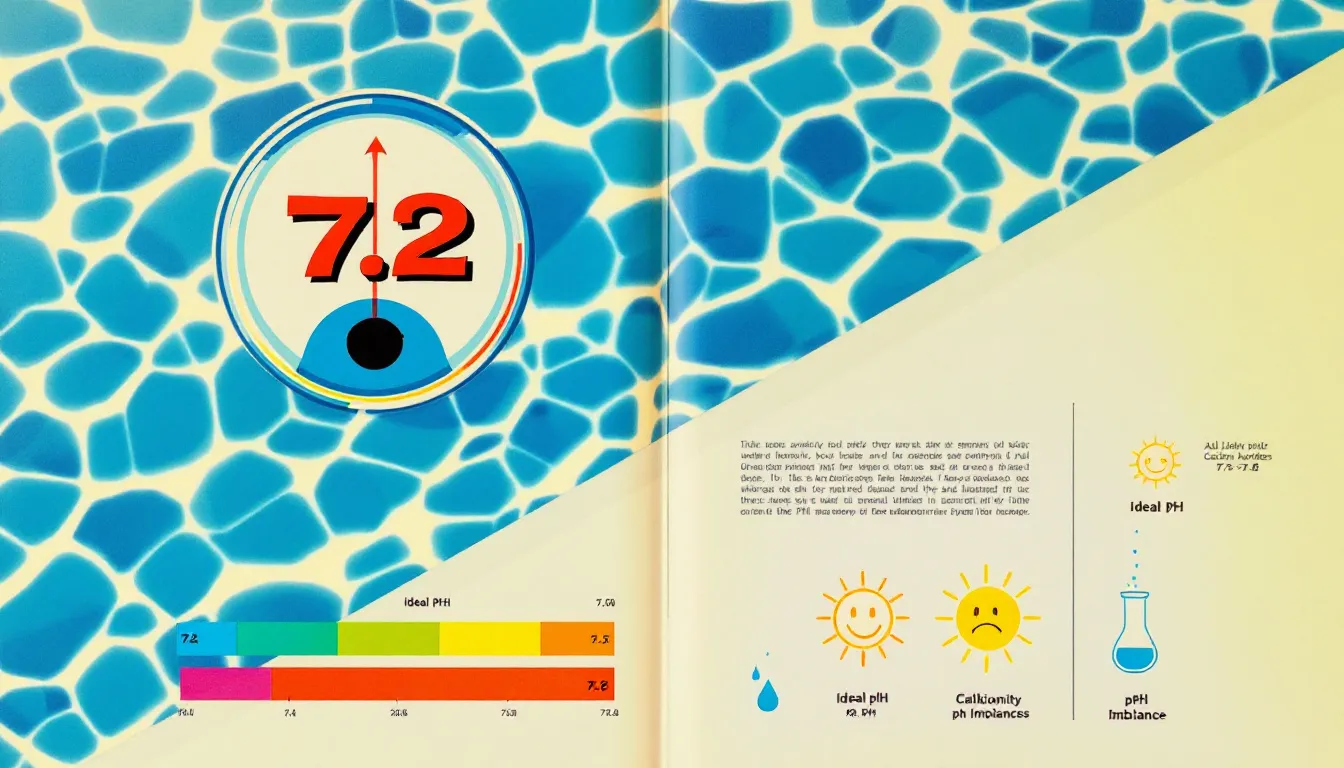 Balanced pool water chemistry prevents red eyes and skin irritation, ensuring swimmer health. Imagine diving into a pool only to come out with irritated eyes and dry skin; this can be avoided by keeping the swimming pool water chemistry balanced. Proper pool chemistry also ensures effective sanitation, keeping the water free from bacteria and ensuring a safe swimming environment. This means you can swim worry-free, knowing the water is clean and safe.
Unbalanced water can lead to damage to pool surfaces and equipment, resulting in costly repairs. For instance, high pH levels can cause scaling, while low pH can lead to corrosion of pool equipment. Understanding the basics of pool water chemistry and maintaining pool water balance helps prevent unnecessary and costly repairs, protecting your investment in the long run.
Key Elements of Pool Water Chemistry
Monitoring several key chemical elements is vital to keeping your pool water balanced. These include pH levels, total alkalinity, chlorine levels, calcium hardness, and cyanuric acid. Each of these elements plays a vital role in maintaining water quality and ensuring a balanced swimming environment.
Understanding these components allows you to master pool chemistry, ensuring your pool remains clean, safe, and enjoyable. Regular testing and adjustments are necessary for mastering pool chemistry to maintain the correct chemical balance.
pH Levels (Ideal Range: 7.2 – 7.6)
The ideal pH level for swimming pools is between 7.2 and 7.6, ensuring swimmer comfort and sanitizer effectiveness. Balanced pH levels prevent corrosion of pool equipment and skin irritation for swimmers. When the pH level exceeds 7.6, several issues can arise. These include scale formation, cloudy water, and reduced chlorine efficiency. Conversely, a pH level below 7.2 can result in metal corrosion and rapid chlorine dissipation, causing skin and eye irritation.
To adjust pH levels, you can use products like soda ash to raise low pH levels and BioGuard Lo'N'SLO to lower high pH levels slowly. Regular testing and adjusting pH levels are crucial to maintaining proper pH levels and ensuring a pleasant swimming experience.
Total Alkalinity (TA) (Ideal Range: 80 – 120 ppm)
Total alkalinity (TA) plays a crucial role in stabilizing pH levels in your pool water. Total alkalinity should be maintained between 80 ppm and 120 ppm for optimal water chemistry. Maintaining total alkalinity within this range helps to prevent rapid pH fluctuations, which can lead to water quality issues. Low total alkalinity makes it difficult to keep your pool's pH levels stable, while high total alkalinity can cause the pH to rise.
To raise total alkalinity, you can use sodium bicarbonate. If you need to lower total alkalinity, sodium bisulphate or muriatic acid can be used. Regular testing and adjustment of total alkalinity ensure a balanced water environment, protecting pool surfaces and equipment from damage.
Chlorine Levels (Ideal Range: 1.0 – 3.0 ppm)
Chlorine is essential for sanitizing pool water, eliminating harmful bacteria, and preventing algae growth. The ideal range for chlorine levels in a swimming pool is 1.0 – 3.0 ppm. Keeping the chlorine level within this range ensures effective disinfection and a clean swimming environment.
Low chlorine levels can lead to a green tint in swimming pool water due to the growth of algae and bacteria, contributing to pool cloudiness. Regularly testing and maintaining proper chlorine levels is crucial for keeping your pool water clear and safe for swimming.
Calcium Hardness (Ideal Range: 200 – 400 ppm)
Calcium hardness is another critical element of pool water chemistry. The ideal range for calcium hardness in pools is between 200 and 400 ppm. Proper calcium hardness levels prevent corrosion and scale buildup in your pool.
If calcium hardness is below 150 ppm, calcium chloride should be added to increase it. To increase calcium hardness, add approximately 100 grams of calcium chloride per 10,000 litres of water to raise hardness by 10 ppm.
Regular testing and adjust calcium hardness ensure an enjoyable swimming environment and protect pool surfaces from damage pool surfaces and equipment.
Cyanuric Acid (Stabilizer) (Ideal Range: 30 – 50 ppm)
Cyanuric acid acts as a stabilizer for chlorine, minimizing its degradation from sunlight. Cyanuric acid should ideally be within the range of 30 to 50 ppm. Maintaining this level is important for optimal results. Using cyanuric acid protects chlorine from the sun's uv rays, extending its effectiveness. This reduces chemical costs associated with chlorine, as it enhances its longevity in the pool.
Regular testing and maintaining the appropriate level of cyanuric acid maximize free chlorine efficiency and keep your pool water clean.
Testing Your Pool Water Regularly
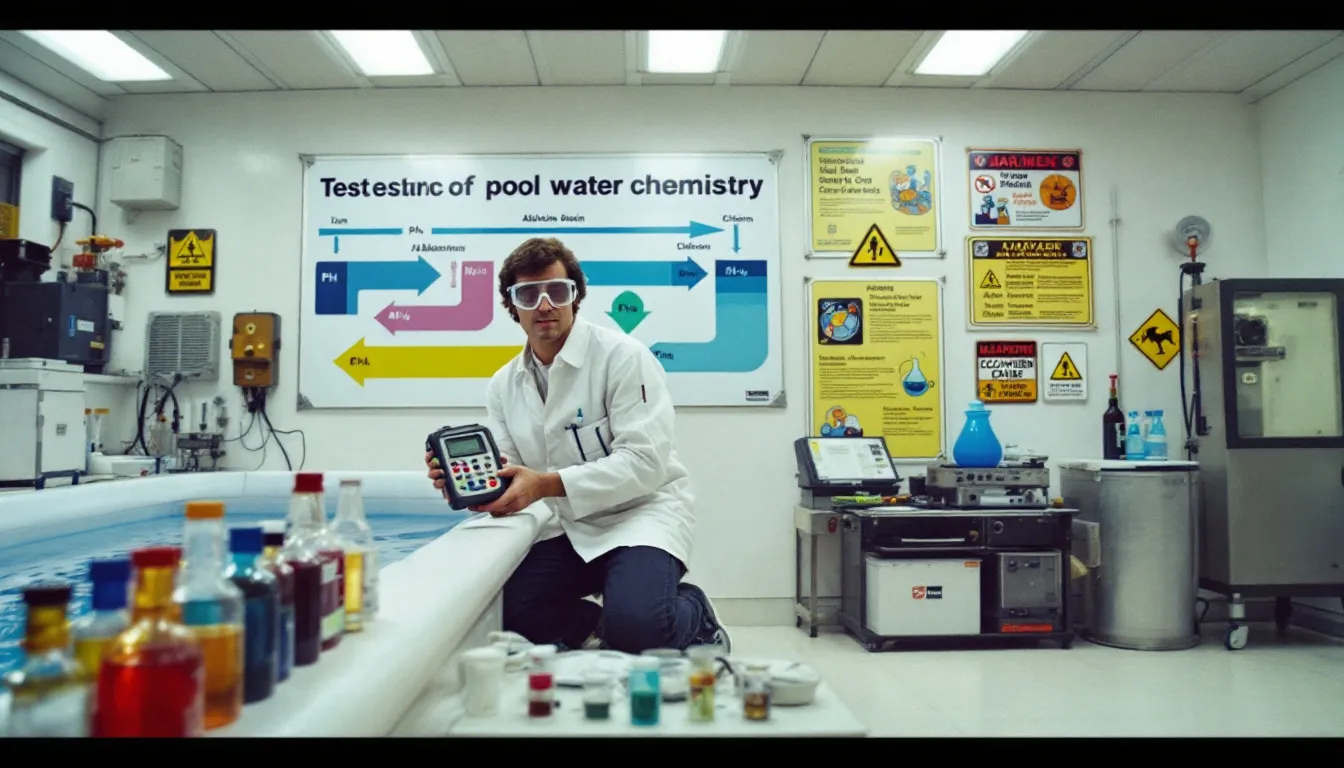 Regular testing of pool water ensures its health and balance. Maintaining water chemistry through regular testing can extend the lifespan of your pool. Routine water checks can save money by preventing costly repairs linked to unmonitored water quality.
Weekly testing of pool's water helps to ensure a comfortable swimming experience free of irritants. Testing regularly prevents damage to pool structures from unbalanced chemical levels. Regularly test your pool water with test strips to ensure a clean and safe swimming environment.
Adjusting Chemical Levels
When adjusting pool chemistry, the first parameter to be corrected is total alkalinity. A general guideline for adding chemicals to pool water is 'less is more'; add chemicals only as needed. Over-treating your swimming pool's water can cause more harm than good.
Total alkalinity stabilizes pH levels, preventing rapid pH fluctuations and protecting pool surfaces from damage. If calcium hardness levels exceed the ideal range, the pool may need to be drained partially or fully. Regular testing and careful adjustment of proper chemical levels maintain balanced water.
Raising and Lowering pH Levels
The ideal pH levels for swimming pools are between 7.2 and 7.6, ensuring chlorine effectiveness while minimizing eye and skin irritation. To raise pH levels, sodium bicarbonate can be added to the pool, whereas muriatic acid is used to effectively lower pH levels.
Balancing Total Alkalinity
To raise low total alkalinity levels in pool water, use sodium bicarbonate. To lower high total alkalinity levels, sodium bisulphate or muriatic acid can be used. Total alkalinity is crucial for stabilizing pH levels in pool water, which prevents rapid fluctuations and contributes to a healthy swimming environment.
Managing Calcium Hardness
To raise the hardness level in a pool, add calcium chloride. Proper calcium hardness levels prevent damage to pool surfaces and equipment.
The ideal range for calcium hardness level in a swimming pool is between 200 to 400 ppm.
Shocking Your Pool
 Pool shock treatments are recommended every 2 to 4 weeks during the swimming season to maintain balanced water chemistry and eliminate contaminants. Using a strong oxidizer in shock treatments can quickly clear the pool of organic and inorganic contaminants. The purpose of pool shock treatment is to clean the pool and remove byproducts left by chlorine breakdown.
To ensure effectiveness, it is advisable to lower the pool's pH level to about 7.2 before shocking. Calcium Hypochlorite is a popular choice for pool shock due to its rapid effectiveness as both an oxidizer and sanitizer. Sodium Monopersulfate is a chlorine-free shock option that allows for immediate swimming after treatment.
Preventing Algae Growth
 Regular maintenance helps prevent issues like algae growth and cloudy water. Maintaining a schedule during cooler months can inhibit algae growth and water imbalance. Using algaecides can inhibit algae growth and they are vital for eliminating algae and maintaining clear water, especially in regions prone to algae growth.
Common types of algae found in pools include green algae, mustard algae, and black algae. Copper sulfate is commonly used to combat green and yellow algae but must be carefully administered to avoid staining. Polymer-based algaecides are effective against yellow algae and are considered safe for regular maintenance due to their non-staining properties.
Maintaining Clear and Healthy Pool Water
 Physical cleaning is essential for maintaining clear pool water as it removes debris that can lead to algae growth. Regular vacuuming, skimming, and brushing help prevent algae by removing organic matter that they feed on. Swimming pool clean pumps and filters maintain water clarity and hygiene by circulating and filtering out debris and contaminants.
Shocking killing bacteria and destroying bacteria and algae colonies, improving the pool sanitation and appearance of the sparkling pool water.
Skimming and Vacuuming
Skimming is essential for maintaining water clarity by removing floating debris. Skimming should be done daily to ensure a clean swimming environment.
Vacuuming is crucial for eliminating settled debris and contaminants from the pool bottom. Vacuuming should be performed at least weekly, or more often if the pool receives heavy usage.
Maintaining Pool Filters
Maintaining clean filters improves filtration efficiency, ensuring better water quality in the pool filter. Checking filter pressure regularly helps identify when cleaning or backwashing is needed. Running the pool pump daily for approximately 12 hours is necessary for effective filtration.
Backwashing sand and diatomaceous earth (DE) filters is essential. It helps to remove accumulated debris and keeps the filters clean.
Common Pool Maintenance Mistakes to Avoid
Balanced pool chemicals prevent issues such as cloudiness, skin irritation, and ineffective sanitation. One common mistake is neglecting the regular testing of pool water, which can lead to fluctuating pH levels and unbalanced water chemistry. Low total alkalinity can cause rapid pH fluctuations, leading to corrosive damage to pool surfaces and swimmer discomfort.
Over-chlorinating a pool can cause swimmer irritation and potential damage to pool equipment, which is a concern for many pool owners. Mixing chemicals or adding them simultaneously can create dangerous reactions and harm swimmers, leading to issues such as combined chlorine.
Maintaining pool equipment regularly ensures effective filtration and helps prevent common mechanical issues that can compromise water quality for pool owners and pool ownership. Avoid these mistakes to keep your pool clean, safe, and enjoyable.
Summary
Maintaining a swimming pool involves more than just skimming the surface and adding chlorine. It requires a thorough understanding of pool water chemistry and regular testing to ensure a balanced, safe, and enjoyable swimming environment. Key elements such as pH levels, total alkalinity, chlorine levels, calcium hardness, and cyanuric acid all play vital roles in maintaining water quality.
By following the guidelines outlined in this guide, you can master pool chemistry and keep your pool water balanced and sparkling. Regular testing, proper chemical adjustments, and avoiding common maintenance mistakes will protect your investment and provide a safe and enjoyable swimming experience for all. Dive in with confidence and enjoy a crystal-clear pool all season long.
Frequently Asked Questions
How often should I test my pool water?
You should test your pool water weekly to maintain proper chemical balance and overall water quality. This helps keep your pool safe and enjoyable for everyone.
What is the ideal pH level for a swimming pool?
For a comfortable swimming experience and effective sanitization, aim for a pool pH level between 7.2 and 7.6. Keeping it in this range makes a big difference!
How can I raise the total alkalinity in my pool?
To raise the total alkalinity in your pool, simply add sodium bicarbonate. It's an effective way to achieve the right balance!
What should I do if my pool has high calcium hardness?
To tackle high calcium hardness in your pool, consider partially draining it and replacing it with soft water to bring those levels down. It's a simple fix that can help keep your water balanced and enjoyable!
Why is it important to use cyanuric acid in my pool?
Using cyanuric acid in your pool is crucial because it stabilizes chlorine, preventing it from breaking down due to sunlight, which helps keep your pool water sanitized for longer. It ensures you get the most out of your chlorine, saving you time and money on maintenance.