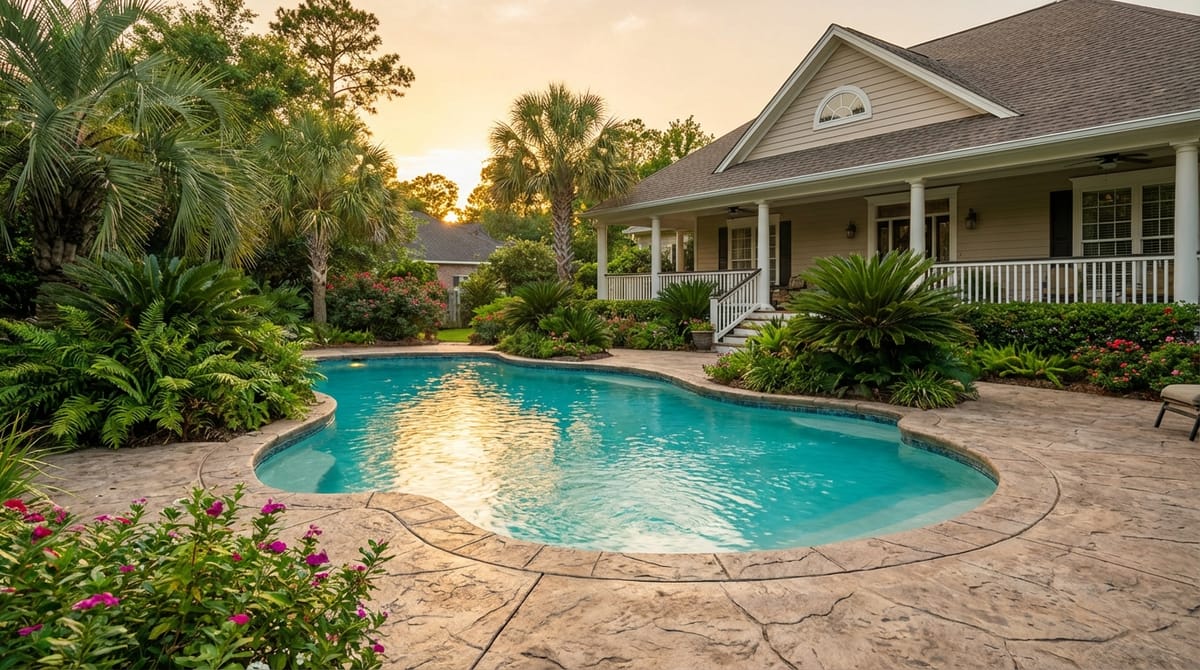
How Fiberglass Pools Boost Home Value in Mississippi
Key Takeaways
- A well-installed fiberglass pool in Mississippi can recoup 40–70% of its cost at resale, with Gulf Coast properties often landing at the higher end due to the region's warm climate and outdoor lifestyle
- Fiberglass pools deliver a stronger return than gunite or vinyl because of lower lifetime maintenance costs, which buyers factor into their offers
- Features like LED lighting, salt systems, and quality decking add the most perceived value per dollar spent
- Proper permitting, professional installation, and a well-maintained pool are essential—unpermitted or neglected pools can actually decrease home value
Does a Pool Increase Home Value in Mississippi?
Yes. In Mississippi's warm climate, a fiberglass pool is one of the few backyard improvements that consistently adds both usable living space and measurable resale value. National data from the National Association of Realtors suggests that in-ground pools add 5–8% to a home's value in southern markets where pools are usable eight to ten months per year.
On the Mississippi Gulf Coast, that percentage tends to hold or exceed the national average. Communities like Bay St. Louis, Pass Christian, and Diamondhead attract buyers who expect outdoor amenities. A move-in-ready pool eliminates a major expense for the next owner and makes your listing stand out in a competitive market.
The key factor is climate. In northern states where pool season lasts three to four months, the return on investment drops sharply. But across South Mississippi, where water temperatures stay comfortable from April through October, a pool is a practical feature—not a luxury that sits unused most of the year.
Not all pools are equal in the eyes of an appraiser. Condition, age, permitting history, and pool type all influence how much value a pool adds. A well-maintained fiberglass pool with current permits and modern equipment commands the strongest premium. A neglected pool with cracked decking or outdated equipment can actually make a home harder to sell.
Why Fiberglass Pools Deliver a Better Return
Fiberglass pools consistently outperform gunite and vinyl liner pools in resale value assessments, and the reason comes down to long-term ownership costs that buyers understand.
Lower maintenance costs attract buyers. Fiberglass surfaces are nonporous, which means less chemical consumption, fewer algae problems, and no need for acid washing or replastering. Buyers researching pool types quickly learn that fiberglass pools in Mississippi cost 50–70% less to maintain annually than gunite alternatives. That translates directly into perceived value.
Longer lifespan with less upkeep. A quality fiberglass pool shell can last 25 years or more without resurfacing. Gunite pools typically need replastering every 10–15 years at a cost of $10,000–$15,000. Vinyl liners require replacement every 7–10 years at $4,000–$7,000. Buyers factor these future expenses into their offers—and fiberglass comes out ahead.
Faster installation means less yard disruption. Because fiberglass pools are manufactured offsite and installed in as little as two to three weeks, the surrounding landscape has more time to mature before you sell. A pool surrounded by established landscaping photographs better and shows better than one with fresh construction scars. For a detailed look at what the installation timeline involves, see our guide on the process of installing Mississippi fiberglass pools.
Energy efficiency is a selling point. Modern fiberglass pools paired with variable-speed pumps and efficient equipment cost significantly less to operate than older pool systems. Buyers are increasingly aware of utility costs, and an energy-efficient pool setup is a tangible advantage during showings.
Which Pool Features Add the Most Home Value?
Not every pool upgrade delivers equal return. Some features significantly boost buyer appeal while others are too personal or niche to recoup their cost. Here is what the data and real estate professionals on the Gulf Coast say matters most.
Quality decking and coping. The area surrounding your pool is the first thing buyers notice. Brushed concrete, natural stone, or quality pavers in good condition create an immediate impression of a well-cared-for outdoor space. Budget $3,000–$8,000 for quality decking—it is one of the highest-return pool investments.
LED lighting. Modern LED pool lights transform the backyard at night and cost relatively little to install or retrofit. A color-changing LED system ($500–$1,500 installed) makes a dramatic visual impact in listing photos and evening showings. Our complete guide to LED lighting for fiberglass pools covers options in detail.
Saltwater chlorination systems. Saltwater pools are in high demand among buyers who want lower-maintenance water care. A salt chlorine generator ($1,000–$2,500 installed) is a feature that real estate agents specifically highlight in listings because it signals a modern, easy-to-maintain pool.
Updated equipment. A variable-speed pump, modern filter, and automation controller tell buyers that the pool is current and efficient. Aging or mismatched equipment raises concerns about upcoming replacement costs. If your equipment is more than 8–10 years old, upgrading before listing often pays for itself through a higher sale price and faster time on market.
Tanning ledges and sun shelves. These shallow wading areas have become one of the most requested fiberglass pool features. They appeal to families with young children and adults who prefer lounging in a few inches of water. If your pool design includes a tanning ledge, it broadens your buyer pool considerably.
Features with lower ROI. Elaborate water features, custom tile mosaics, and high-end automation systems may not recoup their full cost. These are worth installing for your own enjoyment, but do not expect dollar-for-dollar return at resale. The same applies to swim-up bars and grottos—impressive, but too specialized to add broad market value.
How Much Does a Fiberglass Pool Cost in Mississippi?
A complete fiberglass pool installation on the Mississippi Gulf Coast typically ranges from $45,000 to $85,000, depending on pool size, site conditions, decking, and features. Here is a general breakdown.
Pool shell and installation: $35,000–$55,000 for a standard 12×28 to 16×36 fiberglass pool, including excavation, setting, backfill, plumbing, and basic equipment.
Decking and coping: $5,000–$15,000 depending on material choice and total square footage.
Equipment upgrades: $2,000–$8,000 for additions like salt systems, heat pumps, LED lighting, and automation.
Fencing and permits: $2,000–$5,000 for code-compliant fencing and all required permits. For a full breakdown of permitting requirements, see our guide on pool permits for fiberglass pool installation in Mississippi.
Landscaping: $1,500–$5,000 for plantings, sod, and basic hardscaping around the pool area.
At the median total project cost of roughly $60,000, a 50–70% recoup rate means you can expect $30,000–$42,000 in added home value—plus years of personal use before you sell. That equation makes fiberglass pools in Mississippi one of the stronger backyard investments available.
Protecting Your Investment: Maintenance and Documentation
A pool only adds value if it is well-maintained and properly documented. Buyers and their home inspectors will scrutinize both.
Keep equipment current and functional. Replace aging pumps, heaters, and filters before they fail. A working equipment pad with modern components reassures buyers that the pool is ready to enjoy, not a project to inherit.
Maintain water chemistry consistently. Stained surfaces, calcium buildup, and cloudy water signal neglect. Consistent chemical maintenance keeps the fiberglass gelcoat looking new and prevents issues that are expensive to correct before listing.
Retain all permits and inspection records. Permitted pools with documented inspections close faster and appraise higher. If you are unsure whether your pool was properly permitted, contact your local building department in Hancock County or Harrison County to verify. Unpermitted pools can delay or derail a home sale.
Document improvements. Keep receipts for equipment upgrades, resurfacing, and major repairs. A folder showing a history of professional maintenance gives buyers confidence and supports a higher asking price.
Schedule a pre-listing pool inspection. Before putting your home on the market, have a pool professional evaluate the shell, equipment, plumbing, and electrical systems. Addressing small issues before listing prevents them from becoming negotiation points that cost you more than the repair.
Financing a Fiberglass Pool in Mississippi
If the upfront cost feels steep, several financing options make a fiberglass pool installation accessible without draining your savings.
Home equity loans and HELOCs offer the lowest interest rates because the loan is secured by your property. With current home values across the Gulf Coast remaining strong, many homeowners in Bay St. Louis, Diamondhead, and Pass Christian have sufficient equity to fund a pool project at rates significantly below personal loan alternatives.
Pool manufacturer financing is available through many fiberglass pool brands and often features promotional rates for qualified buyers. Terms typically range from 5 to 15 years with fixed monthly payments.
Personal loans from banks and credit unions provide unsecured financing with fixed terms. Rates are higher than home equity products but the application process is simpler and faster—often funded within a week.
FHA Title I home improvement loans allow homeowners to borrow up to $25,000 for property improvements without using the home as collateral. These government-backed loans have competitive rates and flexible qualification requirements.
When evaluating financing, calculate the total cost of ownership including monthly loan payments, insurance premium increases (typically $50–$100 per year), and ongoing maintenance ($75–$150 per month). For most Mississippi homeowners, the combination of personal enjoyment, lifestyle value, and home equity increase makes a fiberglass pool a sound financial decision.
Frequently Asked Questions
How much value does a pool add to a home in Mississippi?
A well-maintained fiberglass pool on the Mississippi Gulf Coast typically adds 5–8% to a home's resale value, recouping 40–70% of the installation cost. A $300,000 home with a quality pool installation can see $15,000–$24,000 in added value. The return is strongest when the pool is properly permitted, well-maintained, and equipped with modern, energy-efficient systems.
What pool features add the most home value?
Quality decking, LED lighting, saltwater chlorination, and updated equipment deliver the strongest return per dollar invested. These features signal a modern, low-maintenance pool that buyers can enjoy immediately. Tanning ledges and sun shelves also broaden appeal, especially for families. Elaborate custom features like grottos or swim-up bars rarely recoup their full cost.
Is a fiberglass pool a good investment compared to gunite?
For most Mississippi homeowners, fiberglass offers a better return on investment than gunite. The lower lifetime maintenance costs—no replastering, less chemical use, fewer repairs—mean fiberglass pools cost 50–70% less to own over 20 years. Buyers recognize this advantage, making fiberglass pools easier to sell and more likely to add measurable value at appraisal.
Does homeowners insurance go up with a pool?
Yes, but modestly. Most Mississippi homeowners insurance policies increase by $50–$100 annually when a pool is added. Your insurer will require code-compliant fencing and may adjust liability coverage. Contact your provider before installation to understand the exact premium change and ensure you have adequate coverage from day one.
Should I install a pool right before selling my house?
Generally, no. Pools deliver the best financial return when you enjoy them for several years before selling, because you capture both the lifestyle value and the resale premium. Installing a pool solely for resale rarely makes sense—the recoup rate means you will likely spend more than you gain. However, if you plan to live in your home for three or more years, a pool is a worthwhile investment that pays dividends in daily enjoyment and eventual resale value.